Showing posts with label Korean Food. Show all posts
2012-02-23
'Naked Chef' Jamie Oliver to Mix Business and Pleasure on Korea Trip
World-famous British chef Jamie Oliver seems to be eyeing venturing into the Korean food business. With his first visit to Korea at the end of this month, Oliver will discuss a business plan with CJ Group, a CJ spokesman said on Wednesday.
The 37-year-old chef has built his reputation by introducing simple recipes and adding natural flavors to dishes on his TV cooking program. His show is now being aired in about 40 countries as his popularity continues to grow.
Female viewers find his cute image and easygoing, unpretentious personality endearing, as he tends to cook with his hair disheveled and shirt half open. In 2003, Oliver was honored as a Member of the Most Excellent Order of the British Empire (MBE) for his contribution to spreading British culinary culture.
He is also known to be a fan of Korean cuisine. In his magazine, called simply "Jamie Magazine," he introduced a Korean bulgogi sandwich -- a baguette stuffed with marinated barbecued beef -- last October. He has also posted stories about Korean food and London's Myungga restaurant in his personal blog.
Oliver first told CJ Group that he wanted to visit the country to learn more about Korean food. The company said that he was very interested in this subject and excited to learn that his cooking program was aired in Korea. Industry insiders say CJ and Oliver will likely launch an international restaurant business using the "Jamie Oliver" brand.
There is also speculation that he will open a branch of his restaurant Fifteen, in Seoul.
"We haven't discussed anything in detail yet, but we will sound him out about the possibility of a collaboration when he visits," said CJ.
Oliver became noticed after he appeared in a BBC documentary about a famous British restaurant while working there. In 1998, he rose to stardom with his show, "The Naked Chef," while he was still in his mid-20s. His cookbooks remain best sellers in the U.K.
http://english.chosun.com/site/data/html_dir/2012/02/23/2012022300987.html
2012-01-26
2012-01-09
OSulloc Tea Fields Jeju Island
The Seogwang tea field surrounding the O'Sulloc Tea Museum covers 240.000 pyeong. It's one of the three green tea fields on Jeju Island owned by AmorePacific Company.
If you visit, take a half a day. If you take part in a tour, you'll be quite rushed if you want to take photos and really absorb the information and atmosphere in the museum. Jeju Island is very hot and humid from mid spring to fall and a good walk through the fields will leave you feeling wilted. But take a good walk all around the museum and down the road.
Go to the restaurant to recharge with an iced green tea or green tea ice cream and relax inside or on the shady patio.
Watch the video about the Museum to get a quick glimpse of why you'll need at least two or three hours here. Not to be missed if you want a little tea culture.
2011-10-27
2011-10-12
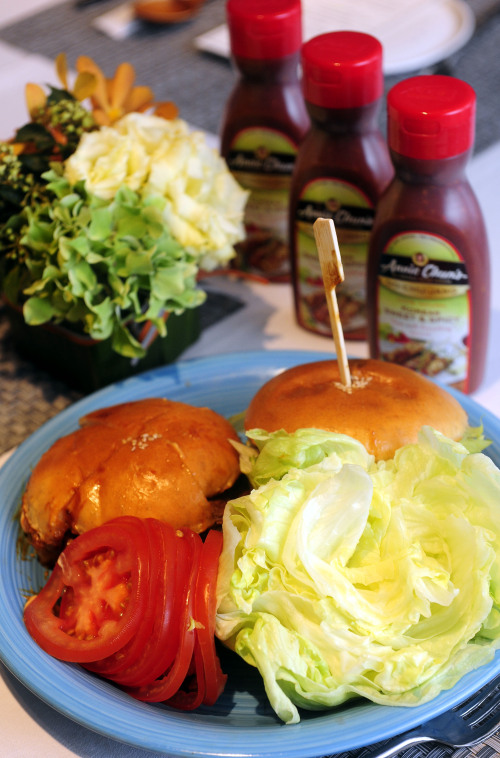
Gochujang burger lands Iowa native for a South Korean bite
Contest winner on how the Korean condiment perfectly compliments the classic American dish
Some people are just born to cook.
Take burger contest winner Jim Calhoun, for instance.
The Iowa native has no formal culinary training. He learned what he knows from watching his wife Suellen work her magic in the kitchen and from his own personal passion for food. So imagine his surprise when he found out he won Annie Chun’s Gochujang Spicy Burger contest.
After entering his glazed gochujang burger with ginger-lime aioli in the competition, he received an email telling him the good news.
“I had to read it four times,” Suellen said, remembering how surprised she had been when she saw the email.
“She said, ‘No way!’” Calhoun added.
The challenge was to incorporate CJ CheilJedang Corporation’s U.S. brand gochujang sauce into a burger.
Calhoun put gochujang (red pepper paste) in “three components” of his dish.
“I used it in the meat itself to make the patty. I used it as a barbecue sauce. I used it with soy sauce, ketchup and honey and some lime juice. And I also made an aioli spread for the buns.”
Not only did Calhoun bump up the flavor of the burger with the European garlic mayonnaise, he also put mint and lime juice into the patty.
When he made it for friends, he served it with kimchi on the side, instead of French fries.
The recipe beat over 200 contenders, making it through the first cut, where 16 were selected, and then through the final cut, earning Calhoun a trip to South Korea for two.
Calhoun and his wife Suellen arrived with son Joshua (who came on his own budget) on Sept. 30 and finished off the last leg of the CJ-sponsored trip on Oct. 4 before continuing their exploration of South Korea on their own.
While this was his first time here, the contest was not the first time Calhoun had encountered gochujang.
“You know I have good Korean friends,” the 57-year-old artist revealed how he had had plenty of opportunities to enjoy Korean food.
| Burger contest winner Jim Calhoun takes a bite out of his own creation during his prize trip to South Korea in Seoul at CJ Foodworld on Tuesday |
Jim’s son Joshua liberally stacked pieces of chili and raw garlic into his suyuk (Korean boiled pork) and talked positively about their visit to the Noryangjin Fisheries Wholesale Market where they dined on sashimi.
Joshua also squirted Annie Chun’s Gochujang over the pizza that was served as part of the lunch.
Of Annie Chun’s Gochujang, which was the focus of the contest, Jim said he’s sure it’s popular where it is currently available in America and that he thinks it will be well-received in the wider U.S. market.
After the sauce entered the American market last February, going out under CJ CheilJedang’s U.S. brand Annie Chun’s, the burger contest ran shortly afterwards, from last March through September.
Jim’s Glazed Gochujang Burger with Ginger-Lime Aiol
Another Contest http://welcome.visitseoul.net/
2011-10-11
First Korean Restaurant to Get Star Rating on Michelin Guide


A Korean restaurant has received a star rating on the Michelin Guide for the first time. The prestigious guide gave one star out of a maximum of three to "Danji," a restaurant in Manhattan run by Korean-American Hooni Kim, in its New York edition, which hit book stores on Wednesday.
Previously, the only Korea restaurant to appear on the guide's radar was Sorabol in Hong Kong, which received a fork rating one notch below a star rating.
Danji is exclusive and only has enough seating for 36 people. It was praised earlier by the New York Times as offering "only joy" and has become popular with long waiting lines a common sight.
Another distinctive feature of the sophisticated eatery is that it is not located on 32nd and Broadway amid the main cluster of Korean restaurants, but in Hell's Kitchen further along the west side where locals tend to head.
The menu is divided between traditional and modern Korean offerings. The traditional items include "bossam," or meat and kimchi wrapped in lettuce, and "pajeon," or vegetable and seafood pancakes, among other popular dishes. More modern variants include the "bulgogi slider" sandwich, a kind of fusion of Korean and American cuisine.
Kim was born in Seoul and moved to the U.S. when he was 10. He quit medical school in California to become a chef after studying at a French cooking school in New York while taking a year off due to health problems. After graduating from the culinary school, he worked at the famed Manhattan eatery "Daniel," which won three stars on the Michelin Guide.
2011-07-17
Summer treats with an Asian twist
Cafes put soy, mangoes and sticky rice cakes into cool desserts
Hot weather brings out the summer treats at cafes and dessert shops across the nation. While that generally signifies bingsu (Korean shaved ice dessert), ice cream and gelato, a growing number of establishments are taking their cue from Asian ingredients. Fueled by the “well-being” movement and a well-traveled palate, three spots dish out eclectic riffs off the cool dessert genre.
Mango Six
The name is a dead giveaway for the Apgujeong-based flagship store of this dessert cafe franchise. Clearly, mangoes play a leading role at Mango Six.
“We bring them in fresh,” said PR team head Kang Hyun-wook, 35, stressing the quality of their mangoes.
The tropical fruit is worked into a wide range of drinks and pudding-style confections that have been inspired by Hong Kong sweets.
Fans of fro-yo can even enjoy self-serve yogurt ice cream replete with a selection of 10 toppings.
One can clearly see Asian influences in items like Mango Six’s “mango spoon and tapioca” drink, which conjures up those beloved bubble teas.
Pureed mango and coconut milk, in lieu of milk tea or purple taro root, are layered over fat black orbs of the chewy starch to make for a considerably more smoothie-like creation.
Rich yet tangy coconut yogurt ice cream tops a mound of slushed-up pureed mango littered with soft nubs of sticky rice cake in their “mango (coconut) ice and rice ball” dessert, while mango yogurt ice cream adorns a bowl full of tapioca, coconut milk and pureed mango in their “mango ice and tapioca” dish.
In a nod to the “well-being” movement, the menu also provides the total calorie count for each dessert.
The flagship store in Apgujeong is open 24 hours, daily. Mango desserts and drinks cost 5,700 won to 6,800 won. Additional tapioca costs 500 won. Yogurt ice cream (four flavors) with toppings (10 varieties) costs 25 won per gram.
To get there go to Apgujeong Subway Station Line 3, Exit 2. Walk to Galleria Department Store, turn right and walk several blocks to the Hakdong Intersection. Turn right and walk to the now-defunct Cinecity Theater. Turn right and walk a couple of blocks. Mango Six will be on the left.
For more information call (02) 518-7266 or visit www.mangosix.co.kr.
Coffee Chu
Churros may be the main feature of this hip Hannam-dong cafe, but it is Coffee Chu’s quartet of healthy smoothies that jumps out at you, primarily because it is rare for a joint that specializes in fried doughnut-like pastries to pair them with beverages made from soy, tofu and mountain yam.
“We went for ‘well-being’ drinks that weren’t too sugary to counterbalance our sweet churros,” manager Lee Ji-eun, 26, explained.
Served up in adorable jam jar-like jugs, Chu’s Tofu, Soy Nut, Farmer’s and White Horse smoothies are most definitely a guilt-free indulgence.
The Tofu, Soy Nut and Farmer’s all work from a common base of soy milk.
Soft, silken tofu and specially ripened bananas are added to the Tofu version, resulting in a mild, creamy affair.
Walnuts and red beans give the Soy Nut its sweet, dessert-like allure, while a blend of five grains including barley and Job’s tears gives the aptly-christened Farmer’s drink its meal-like heft.
Mountain yam and milk are imbued with acacia honey in the White Horse.
Opening hours are from 10:30 a.m. to 11 p.m. daily. Tofu, Soy Nut, Farmer’s, White Horse smoothies cost 7,000 won, or can be ordered as a set with a fritters churro for 9,500 won.
To get there go to Hangangjin Subway Station Line 6, Exit 3 and walk straight past Passion 5. Turn left after passing Kyotofu. Coffee Chu is on the left. For more information call (02) 790-6821 or visit www.coffeechu.co.kr.
Cafe Nothing
Travels through Japan inspired Cafe Nothing owner Jang Jin-gi, 35, to put red bean-free kakigori (Japanese shaved ice dessert) and a moffle (short for mochi waffle) on the menu of his Hongdae cafe.
His rainbow kakigori pleases the child in all of us with its bright stripes of strawberry, melon and peach syrups. Condensed milk and a sprig of mint decorate the simple and sweet summer dessert.
Jang also concocts a mochi (Japanese rice cake) waffle using a special machine he got from Japan.
“We make our own batter with sticky rice and a little bit of sticky rice cake,” he said.
The dainty square (crisp and waffle-like on the outside, soft and chewy on the inside) is painstakingly coated with a blueberry jelly-like sauce, chunks of banana, a scoop of vanilla ice cream and whipped cream.
Opening hours are from 1 p.m. to 11:30 p.m. daily. Cafe Nothing is closed every second and fourth Tuesday of the month. Kakigori comes in five flavors, costs 2,500 won and needs to be ordered with another item on the menu or a second order of kakigori. The moffle costs 6,000 won.
To get there go to Hongdae Subway Station Line 2, Exit 8. Turn right and then turn left at FamilyMart. Walk two blocks and turn right into the street with a FamilyMart on its left. Walk several blocks uphill and turn left at the next FamilyMart. Cafe Nothing is on the left. For more information call (02) 323-0916 or visit blog.naver.com/oscarjjang.
By Jean Oh (oh_jean@heraldm.com)
Hot weather brings out the summer treats at cafes and dessert shops across the nation. While that generally signifies bingsu (Korean shaved ice dessert), ice cream and gelato, a growing number of establishments are taking their cue from Asian ingredients. Fueled by the “well-being” movement and a well-traveled palate, three spots dish out eclectic riffs off the cool dessert genre.
Mango Six
The name is a dead giveaway for the Apgujeong-based flagship store of this dessert cafe franchise. Clearly, mangoes play a leading role at Mango Six.
“We bring them in fresh,” said PR team head Kang Hyun-wook, 35, stressing the quality of their mangoes.
The tropical fruit is worked into a wide range of drinks and pudding-style confections that have been inspired by Hong Kong sweets.
| Mango Six offers a Hong Kong-inspired Asian summer dessert with their refreshing “mango (coconut) ice and rice ball” treat. Rich coconut yogurt ice cream and nubs of sticky rice cake adorn a bowl full of slushed-up pureed mango. (Mango Six) |
Fans of fro-yo can even enjoy self-serve yogurt ice cream replete with a selection of 10 toppings.
One can clearly see Asian influences in items like Mango Six’s “mango spoon and tapioca” drink, which conjures up those beloved bubble teas.
Pureed mango and coconut milk, in lieu of milk tea or purple taro root, are layered over fat black orbs of the chewy starch to make for a considerably more smoothie-like creation.
Rich yet tangy coconut yogurt ice cream tops a mound of slushed-up pureed mango littered with soft nubs of sticky rice cake in their “mango (coconut) ice and rice ball” dessert, while mango yogurt ice cream adorns a bowl full of tapioca, coconut milk and pureed mango in their “mango ice and tapioca” dish.
In a nod to the “well-being” movement, the menu also provides the total calorie count for each dessert.
The flagship store in Apgujeong is open 24 hours, daily. Mango desserts and drinks cost 5,700 won to 6,800 won. Additional tapioca costs 500 won. Yogurt ice cream (four flavors) with toppings (10 varieties) costs 25 won per gram.
To get there go to Apgujeong Subway Station Line 3, Exit 2. Walk to Galleria Department Store, turn right and walk several blocks to the Hakdong Intersection. Turn right and walk to the now-defunct Cinecity Theater. Turn right and walk a couple of blocks. Mango Six will be on the left.
For more information call (02) 518-7266 or visit www.mangosix.co.kr.
Coffee Chu
Churros may be the main feature of this hip Hannam-dong cafe, but it is Coffee Chu’s quartet of healthy smoothies that jumps out at you, primarily because it is rare for a joint that specializes in fried doughnut-like pastries to pair them with beverages made from soy, tofu and mountain yam.
“We went for ‘well-being’ drinks that weren’t too sugary to counterbalance our sweet churros,” manager Lee Ji-eun, 26, explained.
| Coffee Chu blends silken tofu, soy milk and specially ripened bananas to create their mild and frosty Tofu smoothie (Chung Hee-cho/The Korea Herald) |
Served up in adorable jam jar-like jugs, Chu’s Tofu, Soy Nut, Farmer’s and White Horse smoothies are most definitely a guilt-free indulgence.
The Tofu, Soy Nut and Farmer’s all work from a common base of soy milk.
Soft, silken tofu and specially ripened bananas are added to the Tofu version, resulting in a mild, creamy affair.
Walnuts and red beans give the Soy Nut its sweet, dessert-like allure, while a blend of five grains including barley and Job’s tears gives the aptly-christened Farmer’s drink its meal-like heft.
Mountain yam and milk are imbued with acacia honey in the White Horse.
Opening hours are from 10:30 a.m. to 11 p.m. daily. Tofu, Soy Nut, Farmer’s, White Horse smoothies cost 7,000 won, or can be ordered as a set with a fritters churro for 9,500 won.
To get there go to Hangangjin Subway Station Line 6, Exit 3 and walk straight past Passion 5. Turn left after passing Kyotofu. Coffee Chu is on the left. For more information call (02) 790-6821 or visit www.coffeechu.co.kr.
Cafe Nothing
Travels through Japan inspired Cafe Nothing owner Jang Jin-gi, 35, to put red bean-free kakigori (Japanese shaved ice dessert) and a moffle (short for mochi waffle) on the menu of his Hongdae cafe.
His rainbow kakigori pleases the child in all of us with its bright stripes of strawberry, melon and peach syrups. Condensed milk and a sprig of mint decorate the simple and sweet summer dessert.
| Cafe Nothing tickles the senses with their vibrantly colored rainbow kakigori — a Japanese shaved ice treat decorated with stripes of strawberry, peach and melon syrup, ribbons of condensed milk and a sprig of mint. (Chung Hee-cho/The Korea Herald) |
Jang also concocts a mochi (Japanese rice cake) waffle using a special machine he got from Japan.
“We make our own batter with sticky rice and a little bit of sticky rice cake,” he said.
The dainty square (crisp and waffle-like on the outside, soft and chewy on the inside) is painstakingly coated with a blueberry jelly-like sauce, chunks of banana, a scoop of vanilla ice cream and whipped cream.
Opening hours are from 1 p.m. to 11:30 p.m. daily. Cafe Nothing is closed every second and fourth Tuesday of the month. Kakigori comes in five flavors, costs 2,500 won and needs to be ordered with another item on the menu or a second order of kakigori. The moffle costs 6,000 won.
To get there go to Hongdae Subway Station Line 2, Exit 8. Turn right and then turn left at FamilyMart. Walk two blocks and turn right into the street with a FamilyMart on its left. Walk several blocks uphill and turn left at the next FamilyMart. Cafe Nothing is on the left. For more information call (02) 323-0916 or visit blog.naver.com/oscarjjang.
By Jean Oh (oh_jean@heraldm.com)
2011-06-19
Gujeolpan: a Royal Pleasure for Eye and Palate
Gujeolpan is an elaborate dish consisting of nine different foods. In Korean, "gu" means "nine" and "jeol" and "pan" mean "section" and "plate"; thus the dish's name denotes nine foods assorted on a wooden plate divided into nine sections. With eight of the nine spaces on the sides and one in the center, the dish boasts a symmetrical beauty that is enough to take one's breath away.
On top of that, the dish takes on the five traditional colors of Korean ancestors: yellow, blue, white, red, and black. Each of the eight spaces is laden with a distinct flavor in the colors. Normally used ingredients are julienned beef, mushrooms, cucumbers, carrots, separately-fried yellow and white parts of eggs, and bean sprouts, but variations of seafood, meat and vegetables are acceptable.
The ninth space at the center is reserved for miljeonbyeong, small circular paper-thin wheat flatcakes.
Eaten by wrapping the eight side dishes in the flatcakes and then dipping in the seasoned soy sauce for extra zest, Gujeolpan is a pleasure to the eyes and palate alike. It also provides well-rounded nutrition, being a source of multiple vitamins, protein, fat and carbohydrates.
It has its origin in royal cuisine. The number 9 has a symbolical meaning. It represents wholesomeness and brings harmony, which is why gujeolpan is often served at official government banquets for domestic and international guests in a bid to promote harmony. The number's embedded meaning of fullness resonates in ancient Korean vocabulary as well. For example, the word "gujok" with the literal meaning of "nine tribes" stands for "the whole nation," and "guchun" literally meaning "nine skies" refers to "the whole universe." The royal palace was known as "gujung gunggweol"or "ninefold palace," and those with the highest ranks built houses with 99 rooms in ancient times.
Today, this beautiful and healthy dish can usually be enjoyed in restaurants that specialize in royal cuisine, often in the Samcheong-dong area in downtown Seoul.
The ninth space at the center is reserved for miljeonbyeong, small circular paper-thin wheat flatcakes.
Eaten by wrapping the eight side dishes in the flatcakes and then dipping in the seasoned soy sauce for extra zest, Gujeolpan is a pleasure to the eyes and palate alike. It also provides well-rounded nutrition, being a source of multiple vitamins, protein, fat and carbohydrates.
Today, this beautiful and healthy dish can usually be enjoyed in restaurants that specialize in royal cuisine, often in the Samcheong-dong area in downtown Seoul.
2011-06-12
jok bal - Korean Food (one of the late-night meals)
The hair is removed from pigs' feet and they are thoroughly washed. Leeks, garlic, ginger, cheongju (rice wine) and water are brought to a boil. The pigs' feet are added, brought back to a boil and then simmered until tender. Then additional water, sugar and soy sauce are poured into the pot and the contents are slowly stirred. Once the jokbal is fully cooked, bones are removed, and the meat is cut into thick slices. It is then served with fermented shrimp sauce called saeujeot (새우젓)
One of my friends is crazy about jok bal. So, i usually go out to eat jok bal with her about once a month.
this time, i would show a popular jok bal restaurant. Have a look at this. :-)
the owner of this restaurant said, "Our jok bal sells so well, how fast we make it, it sells right away we have to cook jok bal again & again for customers"
cuts jok bal so hard & quickly
the restaurant is full with people, they are absorbed in eating jok bal
there are several dishs except for jok bal.
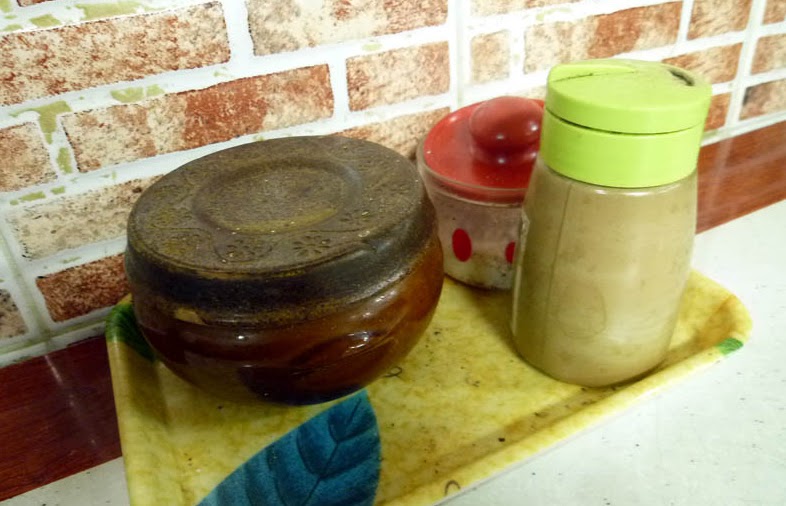
they are something like saurces to eat sundaeguk (similar with the pork stew)
several side dishes to eat with jok bal & sundaeguk
lettuce to wrap jok bal
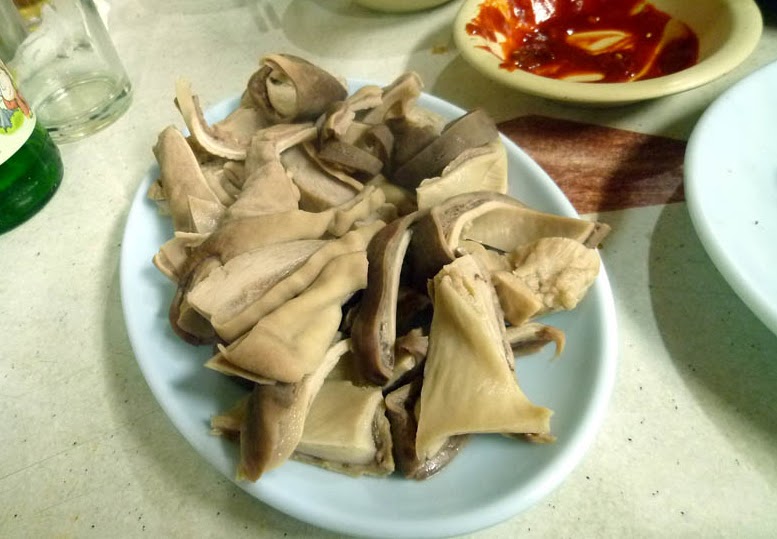
Main dish "jok bal~~~~" looks so delicious?
lots of sesame is on jok bal
if you look them closely, you can find lots of ground pepper
it tastes smooth and rich and chewy
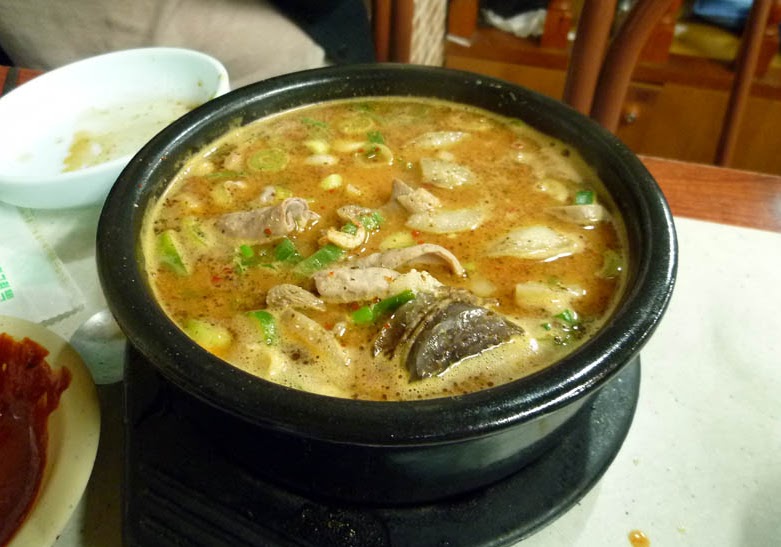
sundaeguk
Sundae (Korean pronunciation: [sundɛ], also sometimes spelled soondae) : The most common type of sundae is made of pig's intestines stuffed with cellophane noodles (dangmyeon), barley, and pork blood, although some variants also contain perilla leaves, scallions (pa), fermented soybean paste (doenjang), glutinous rice, kimchi, and soybean sprouts. It is a popular street food in North Korea and South Korea. In fact, there is a neighborhood called Sundae Town in Sillim-dong that has many restaurants dedicated to sundae.one of the parts of pork. people call this Osori gamtu
2011-06-07
kimchi chronicle
I watched kimchi Chronicle-Documentary (U.S TV program,13series).
As you know, kimchi is the representative food of Korea and their bibimbab(Rice mixed with vegetables) is getting popular in New York now and bibimbab burger also was launched there. this TV program broadcasted kimchi's merit, good effect, nutrition, taste in detail and showed many foreigners eating kimchi deliciously. when they ate kimchi first, they frowned their face because of it's spicy & special odor. But once they accustomed to eating it, they seem like it and challage it more times. Do you want to try kimchi or bibimbab? DROP BY the Korean Restaurants near your home.
kimchi with tobu
kimchi soup
fried kimchi Rice
kimchi & tuna pan cake
2011-05-29
Korean Food 7 making Foreigners Shocked
1. Fernented Skate
2. SilkWarm Larva
3. Chicken Feet
4. Live Octopus
5. Sundae
6. Bosintang
7. Gopchang
In fact, this food's odor may be not good to Koreans too.
It smells pungent, so those who wanna try it first, this will be a quite challenging food
2. SilkWarm Larva
As you know, The Silkwarm is cocoons' larva. Closely looking at them, you can find their feet & spots on thier body. Koreans make stew and cans with them. You can imagine China's insects skewer similar with this food using insects or warms. this is the worst food of 7 food making foreigners freaked out.
a Charming point of this food is it's flaver, the more you chew, the more flavor you get.
something like roasting sesame seeds
Chicken Feet ! it is a famous korean style side dish with drinks.
Most of Foreigners are shocked , When they know it's identity.
and they dislike this food. because of it's unusual appearance.
Koreans eat live octopus with sesame oil. Regretfully this food is selected by foreigners as the vilest food they have ever had . Most of them feel that eating squirming tentacles looks cruel. By the way, You sould be careful that they aren't stuck on your throat when you eat them. (Koreans eat them rolling up with chopsticks)
You can think this food Korean Sausages.
This food is made of pig's guts. Koreans cook this with putting various vegitables & glass noodles in guts.
Some Foreigners who love teokbokki get cultureal shock after seeing this food. (it's friend food of teokbokki) But Some of them come to like.
This food is known for it's controversial point ( Making food with dogs).
At first Foreigners are absolutely flabbergasted after they know what it is made of.
Actually, it is rare food to Koreans and it is regarded as the health food eating in summer season.
We should think of cultural differences. Pet dogs are diffrent with edible dogs. -_-
Last is gopchang. Gopchang means oily guts or flexible guts.
To say correctly, Gopchang is cow's small intestine.
Gopchang is high protein & low calories food and it tastes chewy.
You shoul try this food before you know it's identity.
2011-05-25
Bibimbap burger hits New York
A burger version of the signature Korean dish bibimbap is captivating the taste buds of New York foodies.
Made by Angelo Sosa, an American chef who appeared on the U.S. TV show “Top Chef,” the bibimbap burger has made a successful debut by winning the best burger prize at a competition to find the greatest burger in America.
“Recently we won, by Eater.com, the best burger not only in New York city but in the nation,” Angelo Sosa, co-owner of Social Eatz in New York, said
“So really what makes the burger different from every other restaurant here in the city even the nation, is our toppings,” he said.

Inspired by bibimbap -- a famous traditional Korean dish served with rice mixed with meat, vegetables, an egg, and chili pepper paste “gochujang” – the burger features a beef patty cooked in sweet and savory sauce, topped with coleslaw, picked carrots, cucumbers and a slow-cooked egg.
Sosa’s restaurant in Manhattan also serves a Bulgogi Burger, shik-hae (rice drink) and Korean beef tacos, according to reports.
2011-05-22
Rice Pizza (Fusion Korean Food)
< Ingredient >
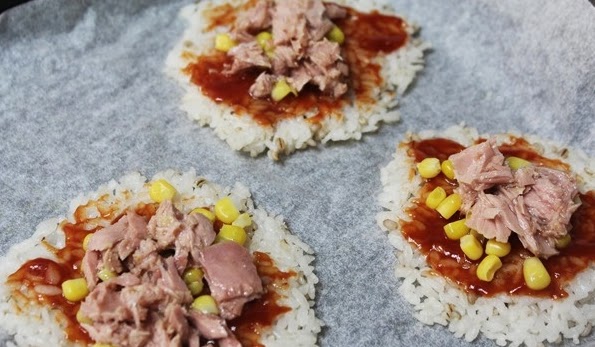
a can of tuna, a can of corn, mozzarella (cheese),
pizza saurce (or spaghetti saurce), parsley powder,sault, pepper
First, Add little sault & pepper to cold rice chips
and flatten it on the oven and bake it about for 15minutes
When the rice chips become crispy, you can use it as doughs
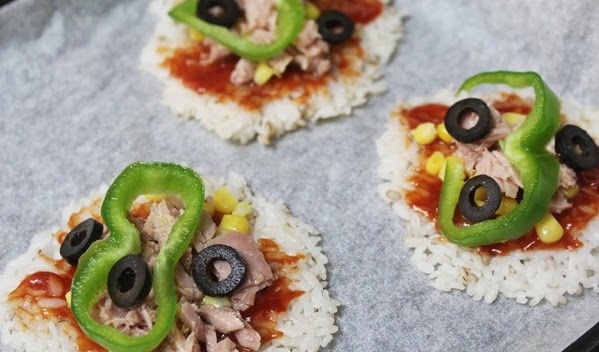
Topping with tuna & corn after spreading over the rice chips with pizza saurce
Last, topping with mozzarella cheese on the rice chips
it is very easy for you to make and healthy food for kids
Subscribe to:
Posts (Atom)